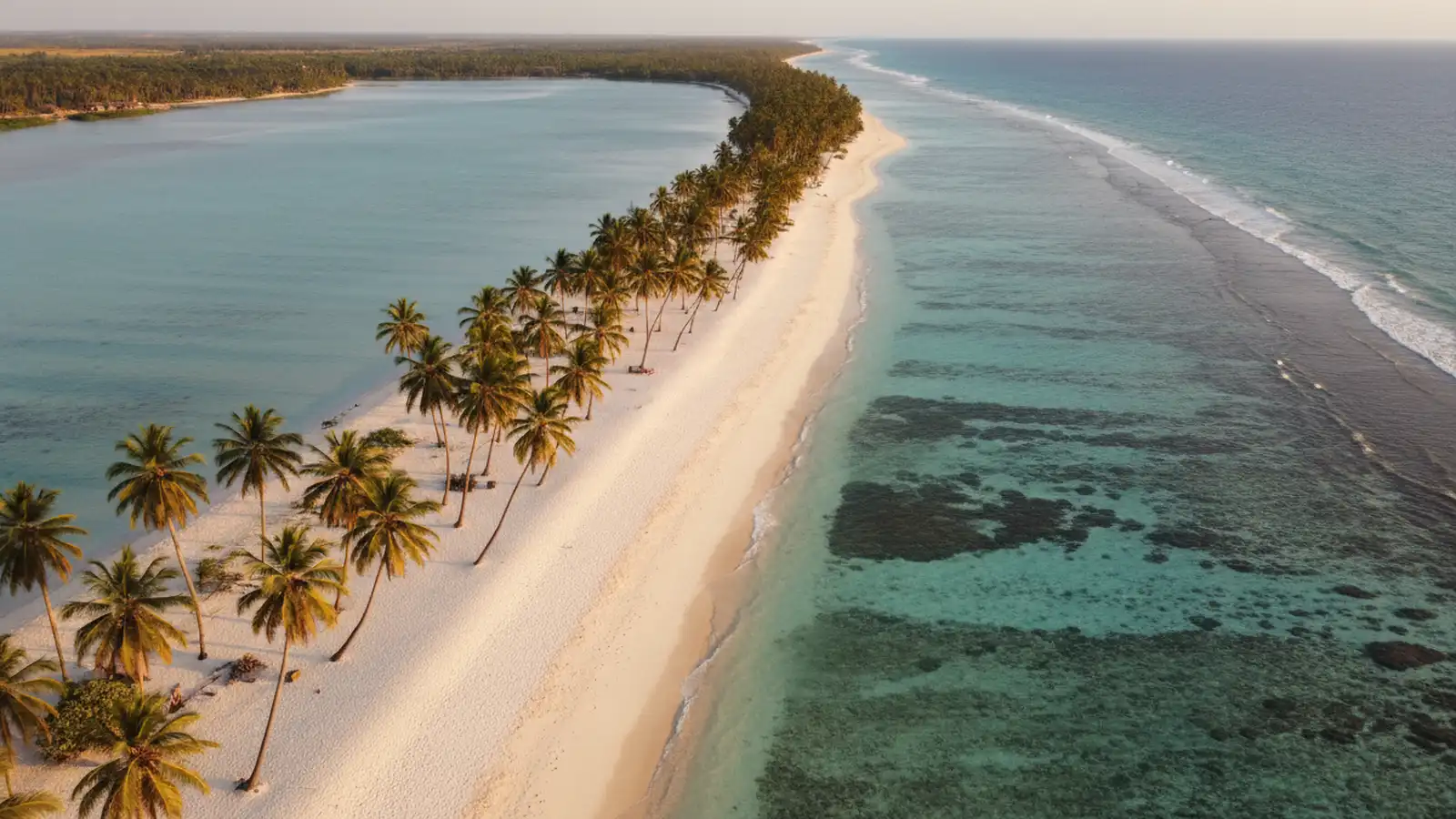
Seventeen kilometres of white coral sand, a barrier reef that turns the Indian Ocean into a warm turquoise lagoon, and coconut palms that lean over the shoreline as if posing for the photograph you haven't taken yet — Diani Beach is not a place that needs to try hard. It has been quietly attracting travellers since the 1920s, when the first colonial-era beach hotels appeared south of Mombasa. Today it consistently ranks among the finest beaches in Africa, and for good reason: the reef keeps the water calm enough for children, the sand stays cool enough to walk barefoot at noon, and the coast delivers sunsets that make even frequent visitors stop and stare.
What makes Diani genuinely different from comparable Indian Ocean destinations — Zanzibar, the Seychelles, Mauritius — is what lies beyond the beach. The Shimba Hills National Reserve, home to Kenya's only sable antelope population, sits forty-five minutes inland. Tsavo East, one of the world's largest national parks, is under three hours away. You can snorkel a coral reef in the morning, spot elephants in the afternoon, and eat grilled lobster on the sand at sunset — all without catching a domestic flight. No island destination can match that combination at these prices.
This guide covers everything you need to plan a trip to Diani Beach — from choosing the right area and understanding real costs to navigating safety, health, and local customs. Each section gives you enough to make decisions, with links to our detailed pages when you want to go deeper.
Knowing the Beach: Diani, Galu, and Tiwi
Most visitors say "Diani Beach" and picture a single stretch of sand, but the South Coast is actually three distinct areas, each with its own character. Choosing the right one matters more than choosing the right hotel.
North Diani and the Public Beach run roughly from the Kongo River northward. This section has the highest density of beach boys and touts — particularly along the public access points where there is no resort security. It is also where you will find the liveliest bar and restaurant scene, with places like Forty Thieves Beach Bar and Sails Beach Bar within walking distance of each other. If you want a social holiday and can handle assertive salesmanship, north Diani delivers energy.
Central and South Diani form the main resort strip. The best infrastructure is here: supermarkets, pharmacies, the Diani Beach Shopping Centre, and the widest choice of hotels from mid-range to five-star. Beach boys are present but less persistent in front of hotel properties. This is the default recommendation for first-time visitors.
Galu Beach continues south of Diani and is noticeably quieter. Upscale resorts like The Sands at Nomad and Kinondo Kwetu attract families and couples seeking privacy. The beach is wider in places, the reef is excellent for snorkeling, and you will rarely be approached by vendors. The trade-off is fewer restaurants within walking distance — you will rely on your resort or need transport to reach Diani's dining strip.
Tiwi Beach, north of Diani and before the old Likoni Ferry road, is the most secluded option. Development is minimal, there are no beach bars, and access roads are rough. It suits travellers who specifically want solitude and don't mind limited amenities.
Seventeen kilometres of white coral sand, a barrier reef that turns the Indian Ocean into a warm turquoise lagoon, and coconut palms that lean over the shoreline as if posing for the photograph you haven’t taken yet.
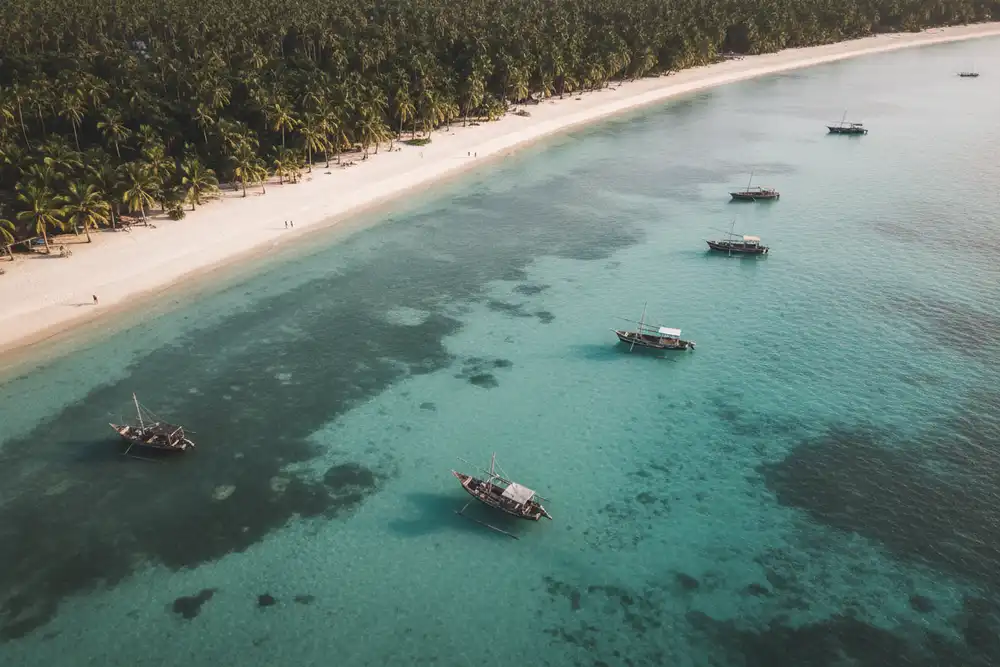
Best Time to Visit
Diani has a tropical coastal climate with two distinct rainy seasons. Getting the timing right can mean the difference between €80 and €200 per night for the same room.
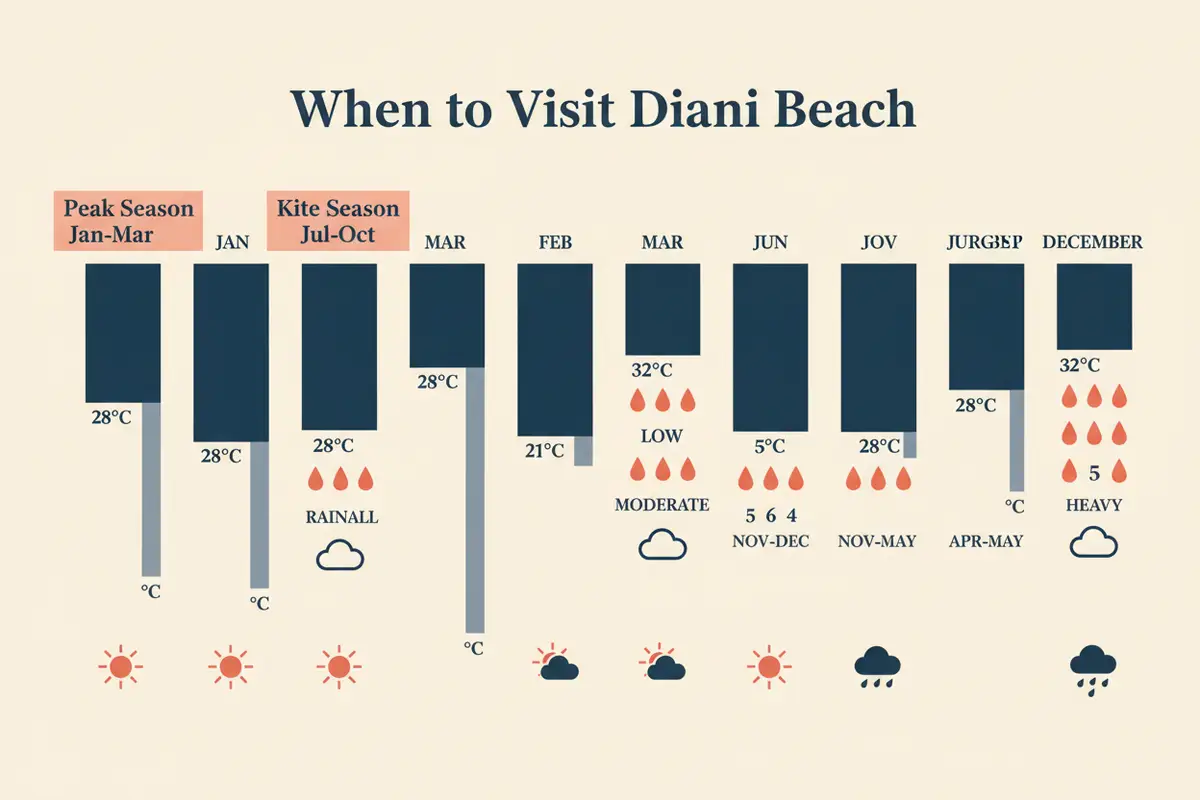
January to March is peak season and the driest period. February is statistically the driest month. Temperatures sit around 28-32°C with low humidity. This is prime time for snorkeling (best visibility), whale shark encounters (January to March), and beach days. Prices are at their highest, and popular hotels book out months ahead.
July to October is the second dry season — slightly cooler (25-29°C) and less humid, with steady trade winds. This is the best window for kite surfing (June to September and December to March) and a great time for budget-conscious travellers, as prices are 20-30% below January peaks.
April to June is the long rains (masika). April and May see the heaviest downpours, often daily afternoon storms. Many smaller hotels close or offer deep discounts — 40-60% off high-season rates. The beach is deserted, the landscape is lush green, and if you don't mind afternoon rain, this is an extraordinary value window. The reef is less accessible (visibility drops), but terrestrial wildlife viewing in Shimba Hills improves as animals concentrate around water sources.
November to December brings the short rains (vuli) — lighter and less predictable than the long rains. December picks up as European holiday travellers arrive. Christmas and New Year command peak pricing.
For detailed monthly planning, see our Plan Your Trip page.
How to Get There
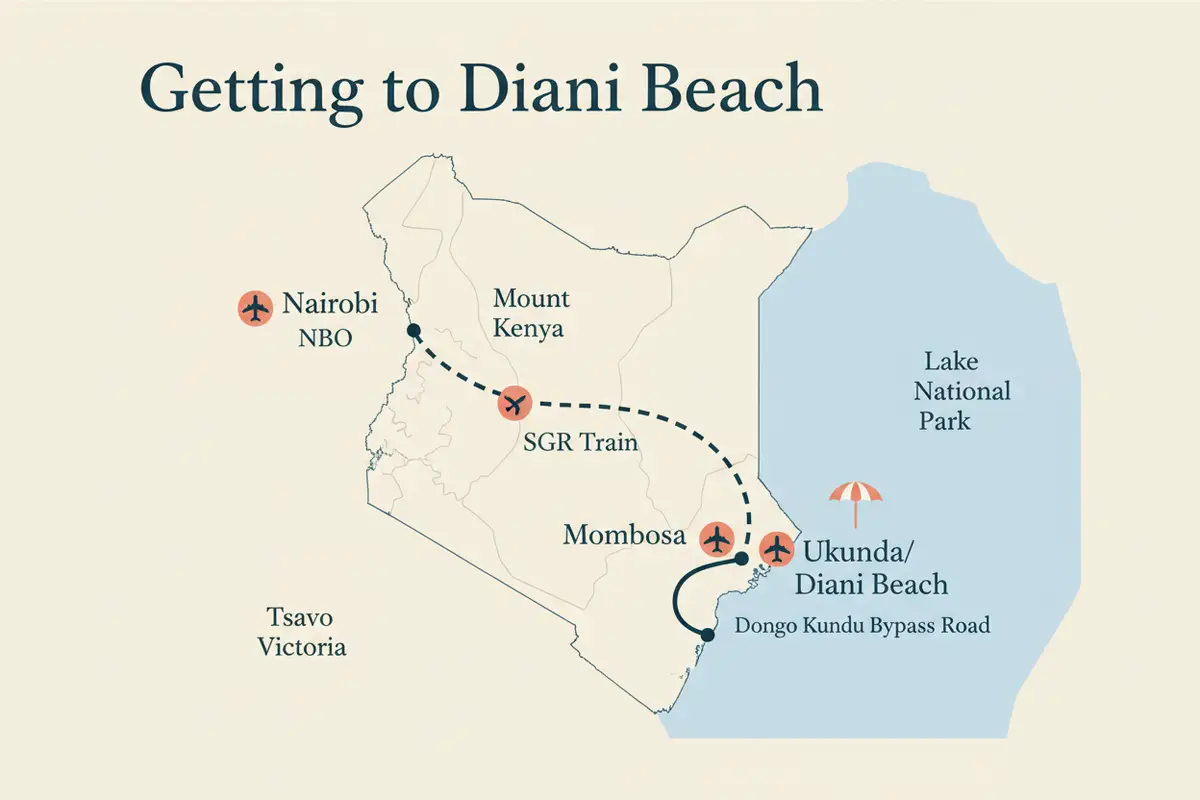
Getting to Diani used to involve either a short flight or a long, unpredictable wait for the Likoni Ferry south of Mombasa. The Dongo Kundu Bypass, which opened in August 2024, changed everything.
By air: Ukunda Airstrip (UKA) sits right on Diani's doorstep. Jambojet flies direct from Nairobi's Jomo Kenyatta International Airport (NBO) — about one hour. Safarilink, Skyward Express, and Fly ALS operate from Nairobi's smaller Wilson Airport with turboprop aircraft. Flights from Wilson take 60-75 minutes and land you closer to the action, but book early as these smaller planes fill fast.
For international arrivals, Moi International Airport (MBA) in Mombasa receives direct flights from Europe — Condor from Frankfurt, TUI from Amsterdam, Neos from Italian cities, and Discover Airlines from German hubs. From MBA, the Dongo Kundu Bypass now gets you to Diani in approximately 35 minutes by road, toll-free. This completely bypasses the Likoni Ferry and the traffic congestion that once made the journey unpredictable.
By SGR train: The Standard Gauge Railway from Nairobi Terminus to Mombasa Terminus takes 5-6 hours and costs around KES 1,000 (€7) for economy or KES 3,000 (€21) for first class. From Mombasa, take the bypass road to Diani.
The Likoni Ferry still operates and remains free for pedestrians. Some motorists prefer it for the shorter route and lower fuel cost compared to the bypass. But for tourists arriving from the airport, the bypass is the clear choice — predictable timing and no queues.
For full transport details, see Getting to Diani Beach.
Things to Do
Diani's appeal is its range. This is not a destination where you will run out of things to do after three days.
Water sports dominate: the barrier reef creates a natural lagoon perfect for snorkeling — expect to see parrotfish, angelfish, octopus, and occasionally dolphins. Between January and March, whale shark encounters are possible off the coast. Diani is one of East Africa's premier kite surfing destinations, with consistent trade winds from June to September and December to March. Deep-sea fishing, stand-up paddleboarding, and glass-bottom boat trips round out the water options.
Wildlife sets Diani apart from island destinations. The Colobus Conservation centre protects the endangered Angolan colobus monkeys that live in the coastal forest canopy — you will see them swinging between trees along the beach road. The Shimba Hills National Reserve, just 45 minutes away, is home to elephants, sable antelope, and the spectacular Sheldrick Falls. For a bigger safari experience, Tsavo East National Park is 2.5-3 hours by road — entirely doable as a day trip or overnight.
Culture and history offer depth beyond the beach. Kaya Kinondo is a sacred Mijikenda forest — a UNESCO World Heritage Site where guided walks through ancient woodland reveal traditional medicine plants and spiritual traditions. Ukunda town, just inland, has bustling markets worth exploring.
Explore the full range at Things to Do in Diani Beach.
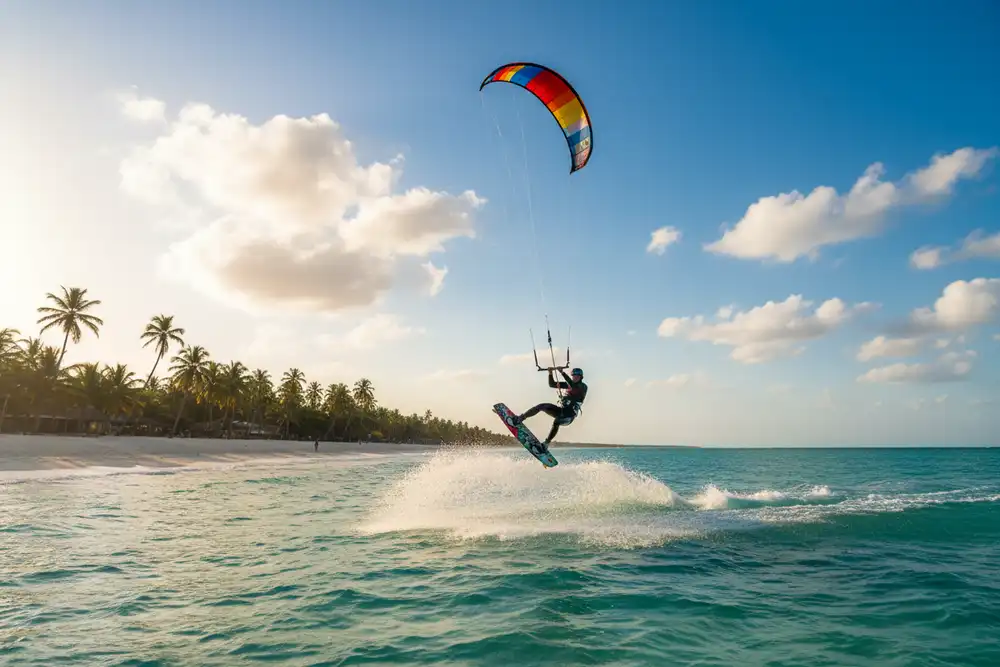
Diani’s appeal is its range. This is not a destination where you will run out of things to do after three days.
Where to Stay
Diani's accommodation ranges from €15-a-night guesthouses to €400+ luxury resorts, with the bulk of quality options falling between €60 and €180 per night.
Budget (€15-50): Guesthouses and small hotels, mostly in Ukunda town or set back from the beach road. You sacrifice direct beach access and resort amenities, but the savings are significant. Good for long-stay travellers and backpackers.
Mid-range (€50-150): The sweet spot. Beach-access hotels with pools, restaurants, and decent rooms. Many sit on the central Diani strip with easy access to restaurants and shops. This is where most independent travellers land.
Luxury (€150-400+): Beachfront resorts with full-service spas, multiple restaurants, and manicured grounds. Galu Beach has the most exclusive options. Some, like Leopard Beach Resort, have been here for decades and know the coast intimately.
Choosing by area: Families do well in Galu (quiet, safe, excellent beach). Social travellers and younger visitors should look at north or central Diani for walkable nightlife. Couples wanting romance should consider the boutique properties in south Diani or Galu. Budget travellers will find the best rates in Ukunda.
Browse options at Where to Stay in Diani Beach.
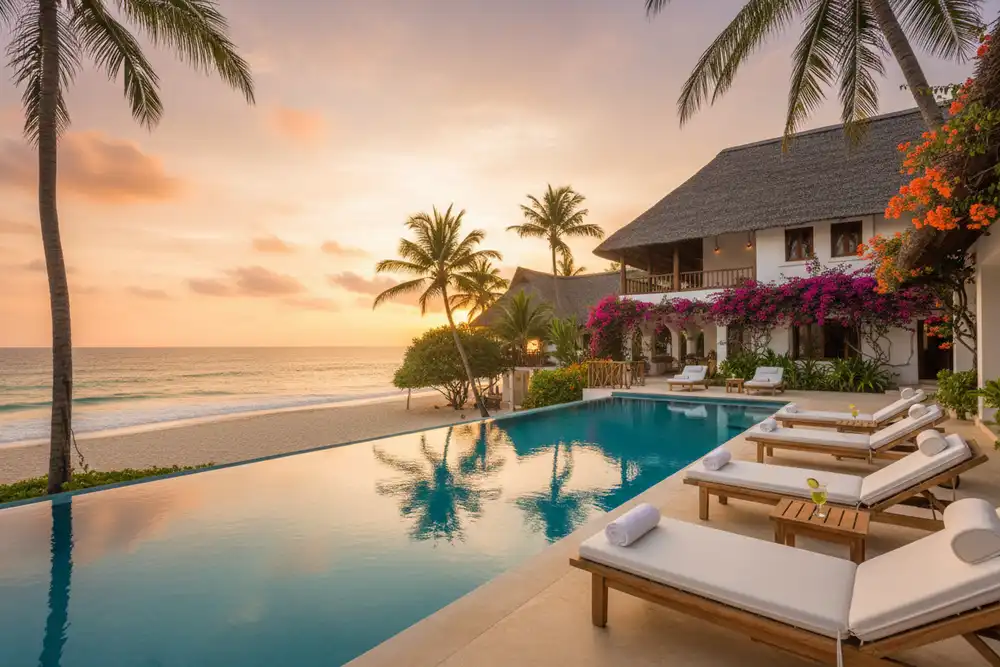
Where to Eat
Dining in Diani spans coastal Swahili cuisine, fresh seafood, international restaurants, and casual beach bars — at a fraction of what you would pay in comparable destinations.
Local restaurants in Ukunda and along the beach road serve Swahili staples: biryani, pilau, grilled fish with coconut rice, and chapati wraps. Expect to pay KES 300-700 (€2-5) for a generous lunch. These are where locals eat, and the food is often better than the hotel buffet.
Tourist-oriented restaurants along the Diani strip serve international menus — Italian, seafood, burgers, steaks — at €6-15 per main course. Beach bars like Forty Thieves and Sails combine food with atmosphere: tables in the sand, live music on weekends, and cocktails at sunset.
Hotel dining varies enormously. Half-board and all-inclusive packages can be good value at mid-range hotels, but at luxury resorts you may find yourself paying €30-50 per person for dinners that aren't notably better than what the independent restaurants offer. Unless you're at a resort with exceptional cuisine, eating out is both cheaper and more interesting.
Discover the full dining scene at Restaurants in Diani Beach.
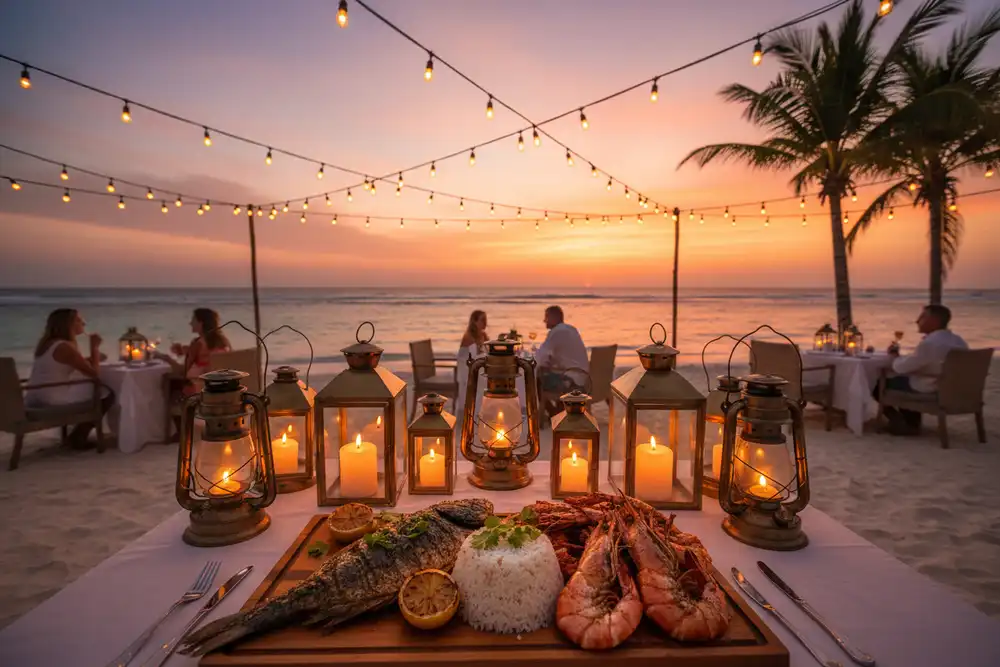
Money and Payments
Kenya uses the Kenya Shilling (KES). The exchange rate is approximately 140 KES to €1. Understanding how money works here will save you real frustration.
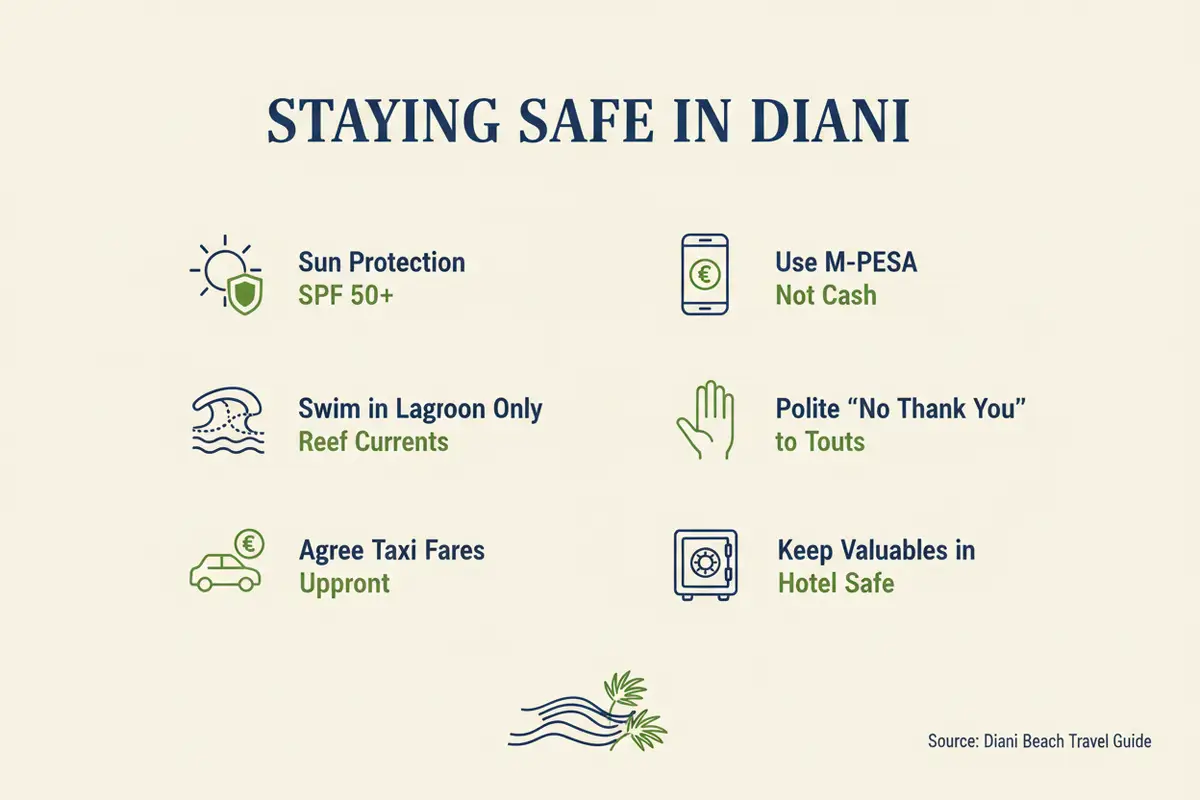
M-Pesa is essential. This mobile money platform is used by virtually everyone in Kenya — from supermarkets and restaurants to tuk-tuk drivers and beach vendors. As a tourist, you can register at any Safaricom shop (there are several in Ukunda and Diani). Bring your passport for KYC verification. Load credit via cash deposit, and you can pay anywhere that displays the M-Pesa sign — which is almost everywhere. Many shops and restaurants prefer M-Pesa to card payments. It is the single most useful thing you can set up on arrival.
ATMs are available at Diani Beach Shopping Centre and in Ukunda. They dispense KES and accept international cards (Visa and Mastercard). Withdraw in larger amounts to minimise transaction fees. Equity Bank and KCB ATMs are generally the most reliable.
Cash is still necessary for tuk-tuks, small market purchases, and tipping. Keep small denominations (KES 50, 100, 200) handy — getting change for a KES 1,000 note at a roadside stall is not always possible.
Euros and US dollars are accepted at most hotels and larger restaurants, typically at a slightly unfavourable exchange rate. For the best value, use KES for day-to-day spending and save hard currency for hotel bills if paying directly.
Tipping: Service charges are not always included. For good service at restaurants, 10% is appreciated. Hotel staff: KES 100-200 (€0.70-1.40) per day for housekeeping. Safari guides: KES 500-1,000 (€3.50-7) per day. Tipping in M-Pesa is increasingly common.
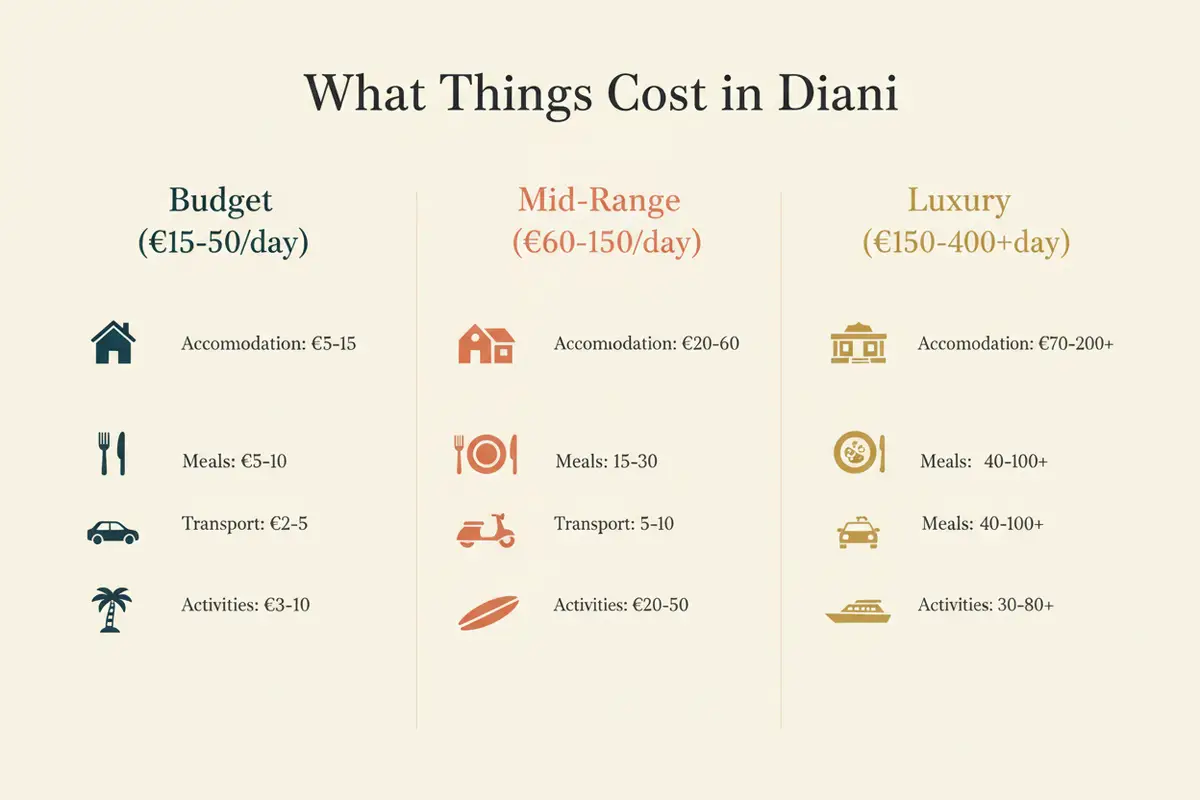
Diani has a tropical coastal climate with two distinct rainy seasons. Getting the timing right can mean the difference between €80 and €200 per night for the same room.
Staying Safe and Handling Touts
Diani Beach is one of Kenya's safest tourist destinations, and it is important to say that clearly. The US State Department's Level 2 travel advisory for Kenya is a country-wide classification driven by concerns in Nairobi and the northern border region — it does not reflect conditions on the ground in Diani.
General safety: Violent crime against tourists is rare. The beach road is well-lit in the hotel zone, and resorts have private security. Standard precautions apply: don't flash expensive electronics, use hotel safes, and avoid unlit beach walks after dark. The beach between hotels is generally safe during daylight but becomes isolated at night.
Beach boys and touts are the topic every visitor asks about and every guide avoids. Here is the honest picture: along the public beach sections — particularly in north Diani — you will be approached by men offering boat trips, jet ski rides, safari bookings, massages, and souvenirs. Some are legitimate operators; others are persistent salesmen.
What works: a clear, firm "no thank you" delivered without engaging in conversation. Do not explain why you're not interested, do not promise "maybe tomorrow," and do not feel guilty. Making eye contact and saying "no thank you, I'm fine" once, then continuing to walk, is all that is needed. The vast majority of beach boys accept a clear refusal and move on.
Where it is less of an issue: Hotel beach sections are calmer — resort security discourages outside vendors. Galu Beach sees very few touts. Central Diani's hotel-fronted sections are moderate. The public access points in north Diani have the highest concentration.
Context matters: Beach boys are local men trying to earn a living in an area with limited formal employment. Understanding this doesn't mean you need to buy things you don't want, but it helps to respond with courtesy rather than irritation. A smile and a firm "no" costs nothing and keeps encounters friendly.
For more detail, see our Safety Guide.
Health and Travel Prep
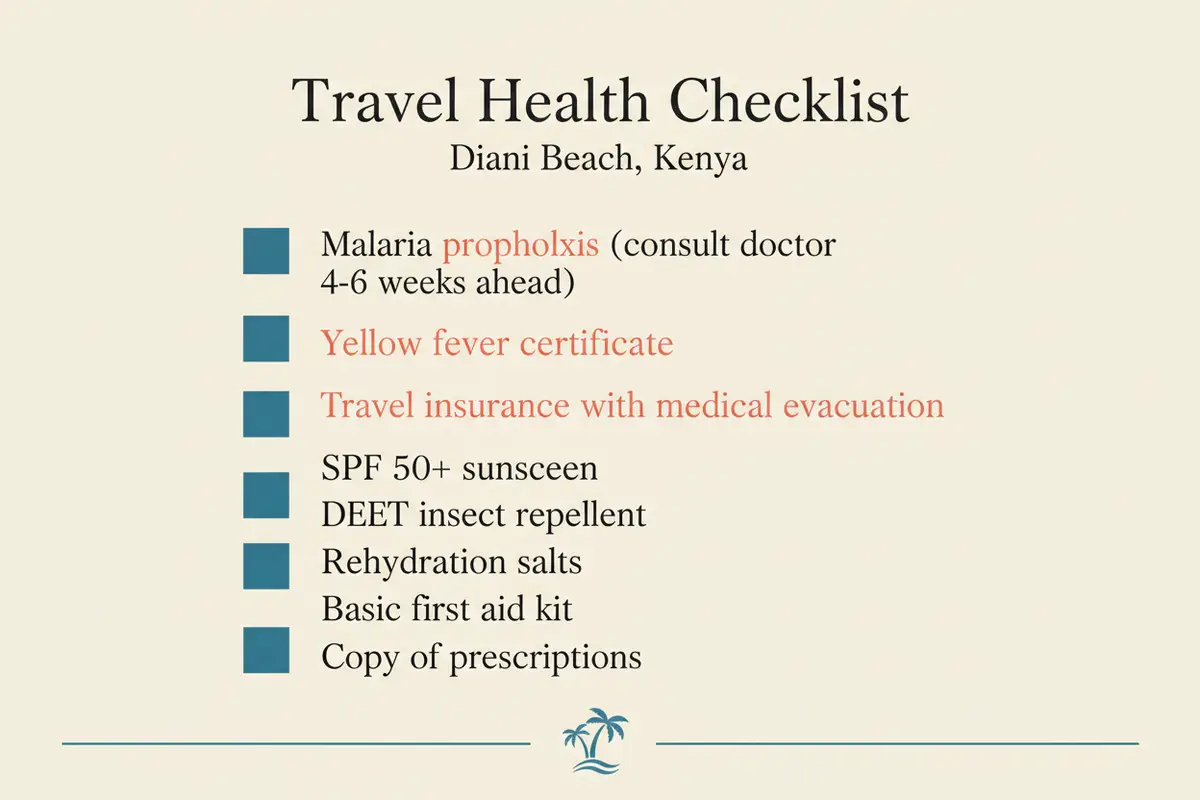
Malaria: The Kenyan coast is an endemic zone for malaria. Prophylaxis is recommended — atovaquone/proguanil (Malarone) or doxycycline are the most commonly prescribed options. Consult your doctor at least 4 weeks before travel. On the ground, use DEET-based insect repellent (30-50% concentration), particularly around dusk and dawn. Most hotels provide mosquito nets, but confirm when booking.
eTA (Electronic Travel Authorization): Kenya replaced the eVisa with an eTA system on 5 January 2024. All foreign visitors must apply online at etakenya.go.ke before arrival. The fee is $30 USD (~€28). Apply at least two weeks ahead — processing typically takes 3-5 business days, but delays happen. You will need a passport valid for 6+ months, a return ticket, and proof of accommodation.
Yellow fever: A vaccination certificate is only required if you are arriving from or transiting through a country with risk of yellow fever transmission. Direct flights from Europe do not require it, but check your routing — a connection through Addis Ababa or Dar es Salaam may trigger the requirement.
Water and food: Do not drink tap water. Bottled water is cheap (KES 50-100 / €0.35-0.70) and available everywhere. Ice in tourist restaurants is generally made from purified water, but ask if unsure. Street food is safe when freshly cooked and served hot.
Medical facilities: Diani Beach Hospital handles general medical issues and minor emergencies. For anything serious, evacuation to Mombasa or Nairobi is standard. Travel insurance with medical evacuation coverage is strongly recommended.
Packing essentials: Reef shoes (the coral is sharp), DEET repellent, high-SPF sunscreen, a light cover-up for evenings and town visits, and a universal power adapter (Kenya uses Type G / British three-pin sockets).
Respecting the Coast
Diani sits within the traditional homeland of the Digo people, a Bantu community that is predominantly Muslim. The coast has its own cultural rhythms, distinct from Nairobi and the highlands, and a little awareness goes a long way.
Dress appropriately when leaving the beach. Swimwear is fine on the sand and at resort pools, but cover shoulders and knees when visiting Ukunda town, markets, or any community area. This is a sign of basic respect, not a strict rule — but locals notice and appreciate it.
Learn basic Swahili greetings. Jambo (hello), Habari? (how are you?), Asante sana (thank you very much), and Pole pole (slowly, take it easy) will earn genuine smiles. Even an imperfect attempt signals goodwill.
Ask before photographing people. This applies everywhere in Kenya, but especially at markets, in villages, and at cultural sites. A quick "May I take a photo?" is always appropriate.
Ramadan awareness: During Ramadan (dates shift each year by the lunar calendar), many local businesses adjust hours, and eating or drinking conspicuously in public during daylight hours in Muslim areas is considered disrespectful. Tourist restaurants and hotels operate normally.
Sacred forests: The Kaya forests — including Kaya Kinondo, which is open to visitors — are UNESCO-recognised spiritual sites of the Mijikenda people. Dress modestly (long trousers or skirts, covered shoulders), follow your guide's instructions, and do not remove any plants or artefacts. These are living cultural sites, not theme parks.
What makes Diani genuinely different from comparable Indian Ocean destinations — Zanzibar, the Seychelles, Mauritius — is what lies beyond the beach.